lunes, 30 de julio de 2018

WORK IN GROUP #2

CANVAS MODEL 

INTRACLASS #24

TOPIC: Electronic commerce Ecuador- China.

OBJECTIVE: To know about the commercial alliances of the Ecuadorian-Chinese E-Commerce.

DEVELOPMENT


RESULT

It was possible to know about the products that Ecuador exports to China 
and the model of electronic commerce between the two republics.

miércoles, 25 de julio de 2018

2ND PARTIAL TEST

2ND PARTIAL TEST


INTRACLASS #23


TOPIC: Lesson.

OBJECTIVE:To evaluate the contents learned in class.

DEVELOPMENT


RESULT

 Application of the evaluation of the knowledge acquired through the classes.

lunes, 23 de julio de 2018

INTRACLASS #22


TOPIC: E-Business Strategies.

OBJECTIVE: Analyze the different e-business strategies to adapt them to customer service.

DEVELOPMENT

-Logistica de entregea.
-Showrooming.

CONSIDERATIONS.-

-Language.
-Weather.
-Marketing 3.0

10 COMMANDMENTS.-

1. Love your consumers and respect your competitors.
2. Be sensitive to change, prepare for transformation.
3. Protect your brand, be clear about who you are.
4. Consumers are diverse, first address those who can benefit more from you.
5. Always offer a good product at a fair price.
6. Always accessible and offers quality news.
7. Get your customers, keep them and make them grow.
8. No matter what your business is, it will always be a service business.
9. Always differentiate in terms of quality, cost and delivery time.
10. Archive relevant information and use your wisdom to make a decision.

RESULT

Application of the 10 commandments of a successful e-business strategy.

miércoles, 18 de julio de 2018

INTRACLASS #21


TOPIC: E-Business today.

OBJECTIVE: Analyze the current situation of electronic businesses and their trends to generate valuable ideas for tourism entrepreneurship.

DEVELOPMENT

STRATEGIES.-

- Analysis process: threats, oportunities and what resources count.
- Sustainable competitive advantage that generates extraordinary returns.

OPERATIONAL STRATEGIES: Responsibilities of the plant.
FUNCTIONS: Responsibilities of chiefs of main activities.
BUSINESS: Responsibilities of managers at the business level.
COORPORATIVES: Responsibilities of administrators at a corporate level.

Essential principles of E business.-

1. Know the customer.
2. Multi-channel interaction with the client.
3. Customize the customer experience.
4. Optimize the value of each client.
5. Focus on 100% customer satisfaction.
6. Global e-business architecture, focused on the client.
7. Extend the ecosystem.
8. Organizational culture on the excellence of e-business.

RESULT

Understanding of the 8 essential principles of e-business for a successful e-business strategy.

lunes, 16 de julio de 2018

EXTRACLASS #10


PRACTICE #7


INTRACLASS #20


TOPIC: E-business today.

OBJECTIVE: Analyze the current situation of electronic businesses and their trends to generate valuable ideas for tourism entrepreneurship.

DEVELOPMENT


The 22 immutable laws of marketing.-

- Law of Leadership.
- Law of the Category.
- Law of the mind.
- Law of Perception.
- Law of Concentration.
- Law of Exclusivity.
- Law of the Ladder.
- Law of duality.
- Law of the Opposite.
- Law of the Division.
- Law of the Perspective.
- Law of Line Extension.
- Law of Sacrifice.
- Law of Attributes.
- Law of Sincerity.
- Law of Singularity.
- Law of the Unpredictable.
- Law of Success.
- Failure Law.
- Law of the Sensationalist Note.
- Law of Acceleration.
- Law of Resources.

Electronic commerce revenue models.-

- For advertising.
- For sales.
- By affiliation.
- By subscription.
-Freemium.

RESULT:

To achieve success in electronic commerce is very important advertising, so you must apply the 22 laws of marketing.

miércoles, 11 de julio de 2018

INTRACLASS #19


TOPIC: Digital electronic commerce, digital products.

OBJECTIVE: Analyze digital electronic commerce and digital products.

DEVELOPMENT

Digital products vs traditional products.-

- The production cost of 1 is high and 2 variable.
- The cost of copies of 1 is almost zero and 2 is greater than zero.
- The delivery cost of 1 is low and 2 is high.
- The inventory cost of 1 is low and 2 is high.
- Marketing costs of 1 and 2 are variable.

Digital markets vs traditional markets.-

- The 1 presents reduced information and the 2 high cost in obtaining it.
- The search costs of 1 are low and 2 are high.
- The transaction cost of 1 is low and 2 is high.
- The bonus of 1 is delayed and of 2 low.
- The price adjustment of 1 is dynamic and 2 has a high cost.
- Segmentation of 1 is low cost and 2 has high costs.
- The network effects of 1 are strong and 2 are weak.
- Disintermediation more possible in 1 and 2 less possible.

Electronic business models.-

- E - tailer. (AMAZON)
- Market maker. (Ebay)
- Content provider. (I Tunes)
- Portal. (Google)
- Community provider. (Facebook)
- Service provider. (Google Apps)

RESULT

The development of technology has allowed developing new business forms such as social networks, providers of services such as applications and digital content providers such as photos, videos, music.

TASK

Make the 3 practical cases of chapter 10 of the base book.

lunes, 9 de julio de 2018

INTRACLASS #18


TOPIC: Analysis of success stories.

OBJECTIVE: Analyze the different applications that were successful in electronic business.

DEVELOPMENT

- Information systems help to find solutions to problems.
- The online demographics of buyers are expanding.
- Electronic commerce continues to be the fastest growing form of commerce.
- Web 2.0.

Characteristics of electronic commerce technologies.-

-Ubiquity.
- Global Reach
- Universal Standards.
- Wealth
- Interactivity
- Density of the information.
- Customization / adaptation.
- Social technology.

RESULT

The development of technology has allowed developing new business forms such as social networks, providers of services such as applications and digital content providers such as photos, videos, music.


miércoles, 4 de julio de 2018

INTRACLASS #17


TOPIC: Entrepreneurship.

OBJECTIVE: Analyze the Canvas Model.

DEVELOPMENT 

TEDX.-

- Video about travelers and businesses. Contact with other cultures allows us to break the prejudice that the people of the world are bad.
- The e-business is not the same as the traditional business.


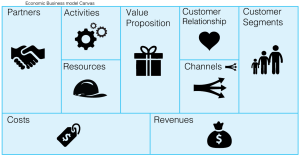
CANVAS MODEL.-

Economic_business_model_canvas

- Key partnerships.
- Business objectives.
- Value proposal.
- Relationship with the client.
- Customers.
- Key resources.
- Distribution and marketing channels.
- Cost structure.
- Sources of Income.

RESULT

The CANVAS model is an entrepreneurial methodology for a business idea. Which allows us to identify the key points for the future idea.

TASK 

Application of the Canvas Model as a tourist guide to the promoted attraction.

PRACTICE #6


lunes, 2 de julio de 2018

WORK IN GROUP #3

JUMON PROMOTIONAL VIDEO


EXTRACLASS #9


EXTRACLASS #


INTRACLASS #16


TOPIC: Promotional Videos.  

OBJECTIVE: Make a promotional video about a parish in the Province of El Oro. 

DEVELOPMENT 

JUMON PARISH.-


LA CUCA WAITS FOR YOU.- 


BALSAS PARISH.-


HAPPY FRUIT.-


ZARUMA.-


EL VADO SPA.-


CHILLAYACU CAVERNS.-


PAILONES DE MUYUYACU.-


LOS SAMANES FIFTH.-


PAILONES OF TOBAR RIVER.-


Work in class.-


RESULT :

Development of a promotional video about a parish of El Oro Province. 


PRACTICE #5

PROJECT #1

JUMON PROMOTIONAL VIDEO